Concrete Slab & Foundation Work
Your building's foundation is too important to trust to anyone but an experienced concrete pad contractor.
Why Your Foundation Matters So Much
Everything sits on your foundation. If it's not level, doors won't close right. If it settles unevenly, you'll see cracks in your walls. If moisture gets in, you'll deal with mold and structural damage. Getting the foundation right from the start saves you from expensive repairs down the road.
In Riviera Beach, foundation work requires special attention to local conditions. The sandy soil, high water table, and hurricane risks all affect how we design and install foundations. We've built hundreds of slabs and foundations in this area. We know what works and what doesn't.
Whether you're building a new home, adding a room, or constructing a shed or garage, the foundation determines how long your structure lasts. We don't rush the job or cut corners. Every foundation we build is engineered for the specific conditions of your property and meets all local building codes.
What Makes a Good Foundation
- •Proper soil preparation: The ground under your slab must be compacted and stable to prevent settling.
- •Adequate thickness: Residential slabs are typically 4 to 6 inches thick with reinforcement for strength.
- •Moisture barriers: A vapor barrier prevents ground moisture from rising through the concrete.
- •Proper drainage: Water must flow away from the foundation to prevent erosion and settling.
- •Steel reinforcement: Rebar or wire mesh adds tensile strength and prevents cracking.
Foundation Services We Provide
We handle all types of concrete slab and foundation work for residential and commercial properties in Riviera Beach. Here's what we do.
New Construction Slabs
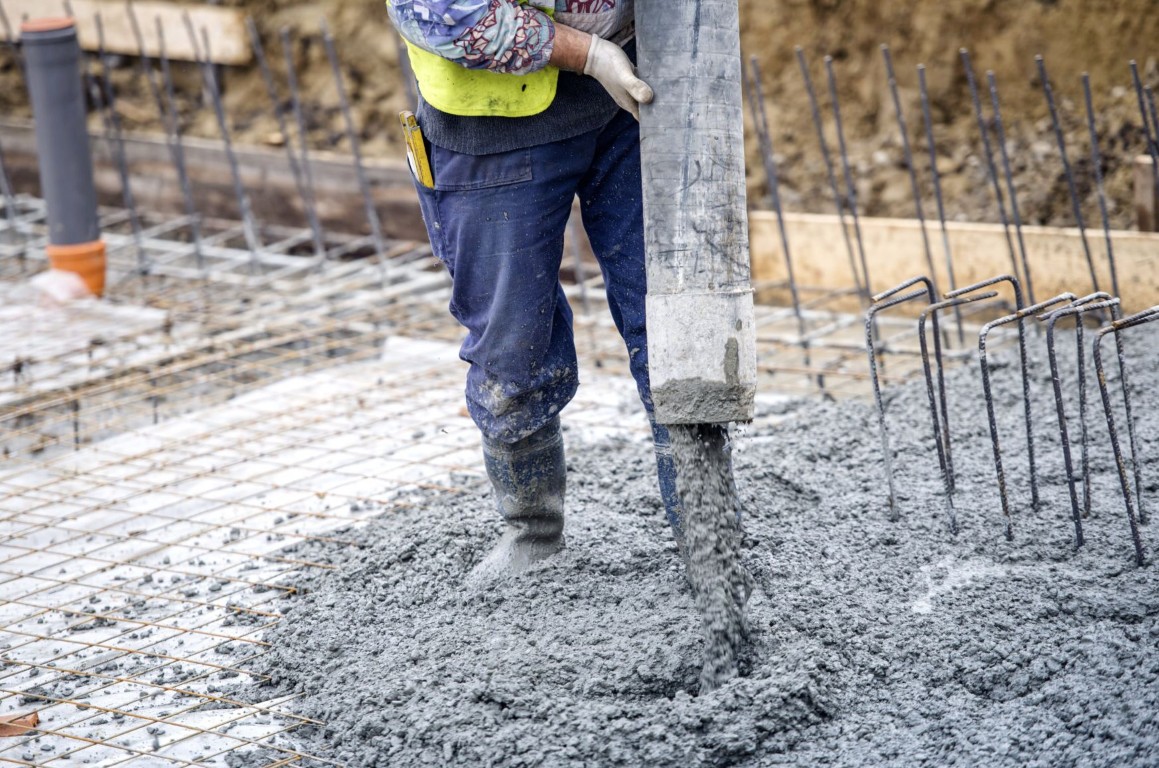
Building a new home or commercial building? We pour the foundation slab that everything else will sit on. This involves site preparation, soil compaction, installing vapor barriers and reinforcement, forming the perimeter, and pouring the concrete to precise specifications.
We work closely with builders and engineers to ensure the slab meets all structural requirements. Plumbing and electrical rough-ins are coordinated before the pour. We also install anchor bolts and other hardware needed for framing. The result is a level, solid foundation ready for construction.
Room Additions and Attached Structures
Adding a room to your house? Building an attached garage? We pour the slab and tie it properly to your existing foundation. This requires careful attention to how the new and old concrete connect. We use dowels and proper joint design to prevent cracking at the connection point.
We also make sure the new slab is at the correct height and slope. If your addition needs to match your existing floor level, we'll pour to the exact height. If it's an outdoor space, we'll add a slight slope for drainage.
Detached Garages, Sheds, and Workshops
Smaller structures still need solid foundations. We pour slabs for detached garages, storage sheds, workshops, and other outbuildings. These projects are typically simpler than home foundations but still require proper preparation and execution.
Depending on what you're building, we'll recommend the right thickness and reinforcement. A storage shed might only need a 4-inch slab, while a garage for heavy vehicles should be 5 or 6 inches thick. We help you make cost-effective decisions based on how you'll use the structure.
Commercial and Industrial Slabs
We also handle larger commercial projects. Warehouse floors, retail building foundations, and industrial slabs require thicker concrete, heavier reinforcement, and more precise specifications. We have the equipment and experience to handle commercial foundation work efficiently.
Commercial work often involves tighter timelines and coordination with multiple contractors. We show up when scheduled, work efficiently, and communicate clearly throughout the project. Your general contractor or project manager will appreciate our professionalism and attention to detail.
How We Ensure Quality Foundations
Foundation work isn't glamorous, but the right concrete pad contractor brings the skill and attention to detail it demands. Here's how we make sure every foundation we build is solid and long-lasting.
Site Assessment and Preparation
We start every project with a thorough site assessment. What's the soil like? Is the water table high? Does the lot slope? These factors determine how we prepare the site. Poor soil might need extra excavation and fill. High water tables might require additional drainage measures.
Once we understand the site, we excavate to the proper depth and grade the area. We then add a compacted base layer, typically crushed stone or gravel. This base provides drainage and prevents settling. We use a plate compactor to ensure the base is rock solid before we pour.
Reinforcement and Forming
We install a vapor barrier over the base to prevent moisture from moving up through the concrete. Then we place steel reinforcement. For most residential slabs, we use rebar in a grid pattern or welded wire mesh. The reinforcement is elevated slightly so it sits in the middle of the concrete thickness, where it provides the most strength.
We build forms around the perimeter to contain the concrete and create the edge of the slab. These forms are carefully leveled and braced. If the slab is large, we also install internal forms to create control joints that will guide any cracking as the concrete cures.
The Pour and Finish
We use high-strength concrete mix, typically 3,000 to 4,000 PSI for residential work. The concrete is placed in sections and spread evenly. We use screeds and laser levels to ensure the surface is perfectly flat and at the correct elevation.
After screeding, we float the surface to smooth it and work any air bubbles out. If it's a garage or driveway slab, we add a broom finish for traction. For indoor floors that will be covered, a smooth trowel finish is fine. We then apply curing compound to help the concrete harden properly.
Curing and Final Inspection
Concrete takes time to reach full strength. We protect the slab during curing, keeping it moist and preventing it from drying too quickly in the Florida heat. After 7 days, the slab is strong enough for light use. Full strength is reached after 28 days.
Before we consider the job done, we do a final inspection. Is the slab level? Are the edges clean? Did it cure properly without significant cracking? We also coordinate any required building inspections. Our work consistently passes inspection because we follow code requirements and best practices.