Concrete Steps & Stairs
Safe, durable steps that connect your home's different levels and last for decades.
Why Choose Concrete for Steps and Stairs
Steps are one of the most used parts of your home's exterior. They need to be safe, stable, and able to handle constant foot traffic in all weather conditions. Concrete delivers on all counts better than wood or metal alternatives.
Wood steps rot in Florida's humidity and require constant maintenance. Metal steps get hot in the sun and slippery when wet. Concrete stays solid and stable year after year. It doesn't warp, rust, or require painting and sealing. Just an occasional cleaning keeps concrete steps looking good.
Safety is the most important factor with any stairs. Concrete steps can be finished with slip-resistant textures that work even when wet. Proper design ensures consistent rise and run dimensions that feel natural to walk on. And concrete's solid construction means no wobbling or flexing underfoot.
Advantages of Concrete Steps
- •Exceptional durability: Concrete steps last 30 to 50 years with minimal maintenance.
- •Weather resistant: Handles Florida's heat, rain, and humidity without rotting or rusting.
- •Safe surfaces: Slip-resistant finishes provide secure footing in wet conditions.
- •Design flexibility: Can be formed to any size, shape, or configuration you need.
- •Low maintenance: No painting, staining, or sealing required, just occasional cleaning.
Types of Concrete Steps We Build
Every home has different needs. We build steps that work for your specific situation and match your home's style.
Front Entry Steps
Front entry steps are the welcome to your home. We build them to be inviting and proportional to your entrance. Typical front steps have 3 to 6 risers with wide treads for comfortable climbing. We can add side walls, decorative railings, or stamped patterns to enhance appearance.
Landing size matters for front entries. You need room for people to stand while opening the door, and space for packages or furniture delivery. We typically build landings at least 4 feet deep and wider than the door for comfortable use.
Porch and Deck Steps
Steps connecting porches or decks to ground level see heavy use. We build them wide enough for comfort, usually 3 to 4 feet across. If your porch or deck is high, we might recommend multiple flights with landings rather than one long staircase. This is safer and more comfortable to use.
Back Door and Service Steps
Back door steps don't need to be as elaborate as front entries, but they still need to be safe and functional. We build them to the right height with proper dimensions for everyday use. These steps often see more traffic than front entries, so durability is especially important.
Garden and Landscape Steps
Sloped yards often need steps to connect different levels. We can build steps that blend into your landscape design, either as individual stepping pads or continuous staircases. These steps help prevent erosion and make your yard more functional and accessible.
Design Considerations
Proper step design follows building codes for safety and comfort. Risers (the vertical height of each step) should be 6 to 8 inches. Treads (the horizontal depth) should be at least 10 inches, preferably 11 or 12 inches. All steps in a flight must be the same height and depth so people don't trip.
We also consider handrails. Building codes require railings for stairs with more than three risers. We can install metal railings, or build concrete side walls that serve as railings. We ensure everything meets code while looking good and feeling solid.
How We Build Concrete Steps
Building concrete steps requires precision. Every dimension matters for safety and comfort. Here's our process for creating steps that are both functional and attractive.
Planning and Measurement
We start by measuring the total rise (vertical distance from bottom to top) and determining how many steps you need. We calculate riser height and tread depth to ensure comfortable, code-compliant stairs. If you're replacing existing steps, we often match the existing layout unless there's a safety issue.
Foundation and Base
Steps need a solid foundation. We excavate and pour a concrete footing at the bottom of the stairs. This footing extends below frost depth and provides a stable base that won't settle. For steps attached to a house, we tie the foundation into the existing foundation or slab properly.
We also prepare a compacted base under the full footprint of the stairs. This prevents settling and ensures the entire structure is stable. Proper drainage is built in so water flows away from the steps and foundation.
Forming and Reinforcement
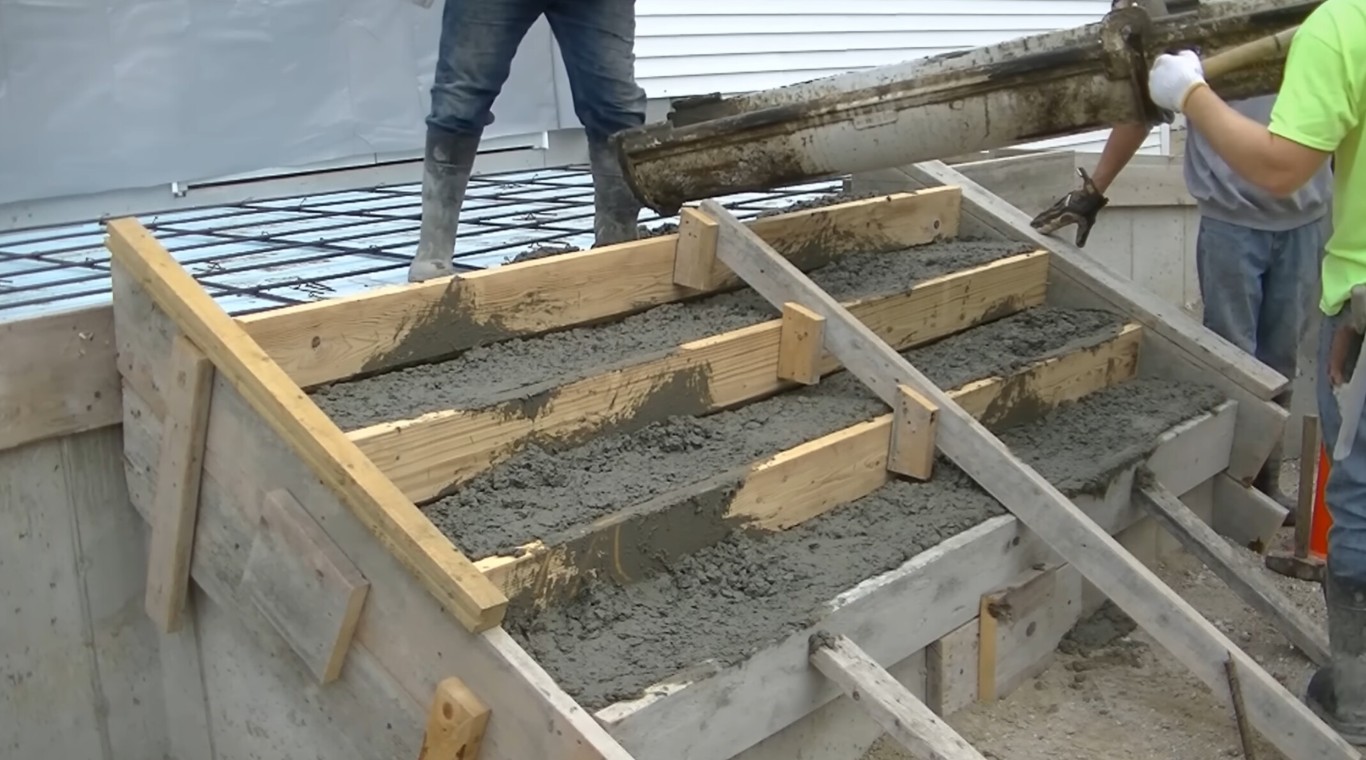
Building the forms for concrete steps takes skill. Each step must be precisely positioned. We build forms from lumber or steel, ensuring they're level side to side and the correct height. We brace everything solidly because concrete is heavy and can push forms out of position.
We install steel reinforcement throughout the structure. Rebar runs vertically and horizontally to tie the steps together and prevent cracking. The reinforcement is especially important where steps connect to landings or other structures.
Pouring and Finishing
We pour concrete starting at the bottom and working up. Each step is filled completely, and we use vibrators to eliminate air pockets. As the concrete sets up, we finish the surfaces. Treads get a non-slip texture, usually a broom finish that provides traction when wet.
Edges are rounded slightly so they don't chip easily. We create a slight slope on each tread so water runs off instead of pooling. After finishing, we cure the concrete properly to achieve full strength.
Final Details
After the concrete cures, we remove the forms and install any railings or other features. We seal the concrete to protect it from moisture and stains. We also check all dimensions one final time to ensure everything meets code and your expectations.