Sidewalks, Walkways & Flatwork
Connect your outdoor spaces with safe, attractive concrete walkways that last for decades.
Why Concrete Works Best for Walkways
Your walkways need to be safe, durable, and good-looking. Concrete delivers on all three better than other materials. It creates a solid, level surface that won't shift or develop trip hazards like pavers or gravel paths.
In Riviera Beach, where rain is frequent and the sun is intense, concrete holds up remarkably well. It doesn't rot like wood, fade like pavers, or wash away like stone. A properly installed concrete walkway can last 30 years or more with minimal maintenance.
Concrete also offers flexibility in design. You can create straight paths, curved walkways, or irregular shapes that follow your landscape. Add borders, integrate lighting, or choose decorative finishes to make your walkways a real design feature instead of just functional paths.
Benefits of Concrete Walkways
- •Safety first: Smooth, level surfaces eliminate trip hazards and provide stable footing in all weather.
- •Long lasting: Concrete walkways last 25 to 40 years, far longer than wood or gravel alternatives.
- •Low maintenance: Just occasional cleaning and resealing every few years keeps them looking great.
- •Weather resistant: Handles Florida's heat, rain, and humidity without warping, rotting, or growing mold.
- •Property value: Well-designed walkways improve curb appeal and make your property more functional.
Types of Flatwork We Install
Flatwork is any horizontal concrete surface. We handle all types of flatwork projects, from simple sidewalks to complex multi-purpose areas.
Front Walkways and Entry Paths
Your front walkway is one of the first things visitors see. We create welcoming entry paths that guide guests from the street or driveway to your front door. These walkways are typically 3 to 4 feet wide, enough for two people to walk comfortably side by side.
We can design straight paths for modern homes or curved walkways that add visual interest to traditional landscapes. Borders, decorative edges, or contrasting colors make your entry path stand out. We also ensure proper drainage so water flows off the path instead of pooling.
Backyard Pathways
Backyard paths connect different outdoor living areas. Maybe you want a path from your patio to your garden, or from the back door to a shed or pool. These functional paths keep your feet dry and clean while moving around your yard.
Backyard paths can be narrower than front walkways, usually 2 to 3 feet wide. We design them to follow your yard's natural flow and work around existing landscaping. Curved paths often look more natural in garden settings, while straight paths work well in modern designs.
Public Sidewalks
We install and repair public sidewalks along streets and property lines. These projects require specific dimensions and specifications to meet local codes. We handle all the permitting and ensure the sidewalk meets ADA requirements for accessibility.
Public sidewalks typically need to be 4 to 5 feet wide and include proper curb cuts and ramps where required. We coordinate with municipal inspectors to ensure everything is built to code.
Other Flatwork Applications
We also pour concrete for equipment pads, trash enclosures, dog runs, basketball courts, and other flat surfaces. These projects require the same attention to base preparation, reinforcement, and proper drainage as larger jobs.
Equipment pads for HVAC units, generators, or pool equipment need to be perfectly level and sized correctly. We build them to support the weight and meet manufacturer specifications. Proper installation prevents vibration issues and extends equipment life.
Design Options and Installation Process
Every walkway project starts with understanding how you'll use the space and what look you want to achieve. We'll discuss width, layout, and finish options to create a design that works perfectly for your property.
Planning Your Walkway
Width matters for both function and appearance. Main walkways should be at least 3 feet wide, preferably 4 feet for comfortable two-way traffic. Secondary garden paths can be 2 to 3 feet. We help you choose dimensions that make sense for how you use the space.
We also consider the path layout. Straight lines create a formal, direct feel. Gentle curves add visual interest and can make small yards feel larger. We work with your existing landscape and architecture to create a design that feels natural and intentional.
Finish Options
A broom finish is the most popular choice for walkways. It provides good traction, even when wet, and works with any home style. The subtle texture hides minor imperfections and looks clean without being too plain.
For a more decorative look, we offer stamped patterns that mimic stone, brick, or wood. Exposed aggregate creates a natural, textured surface with visible stones. We can also add borders in contrasting colors or cut decorative patterns into the concrete.
Installation Steps
We start by marking out the walkway location and excavating to the proper depth, typically 6 to 8 inches. This gives us room for a compacted base and 4 inches of concrete. Walkways don't need to be as thick as driveways since they only handle foot traffic.
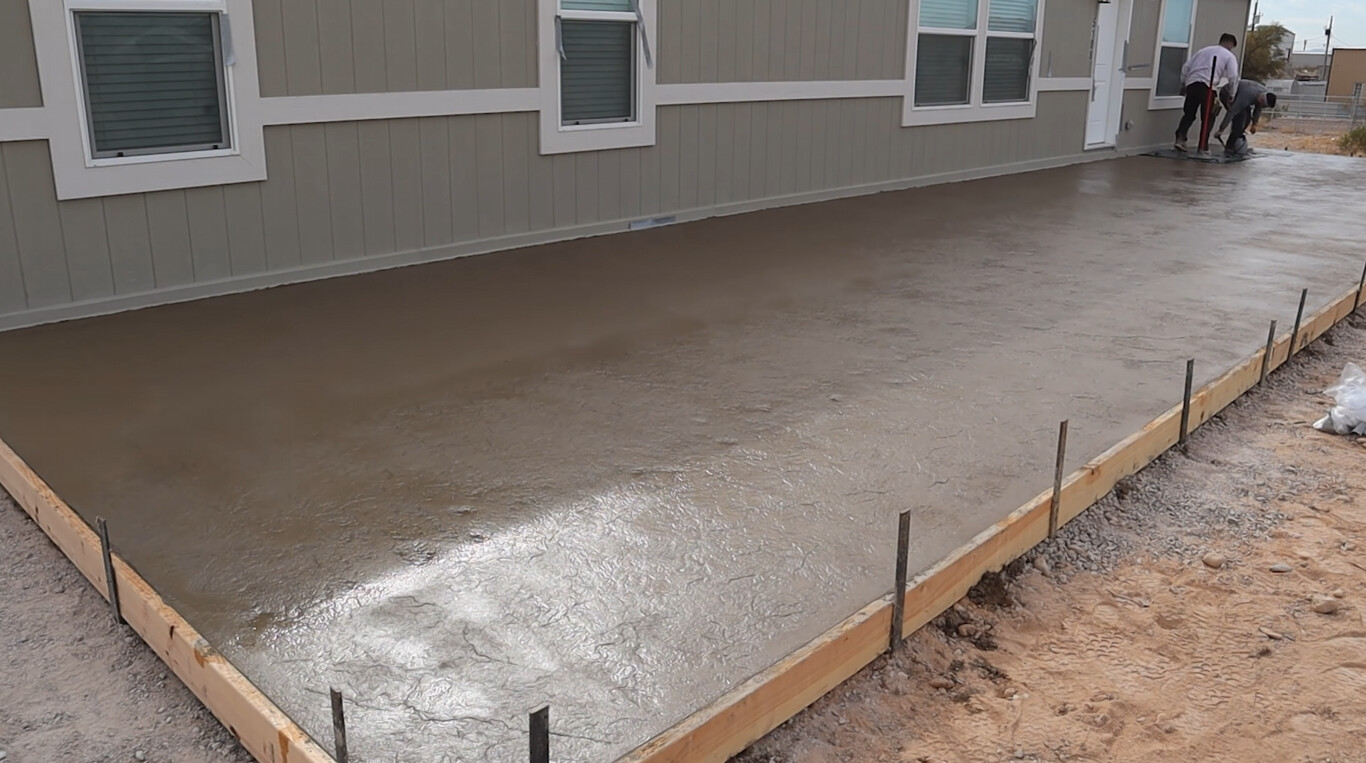
We install a gravel base and compact it thoroughly. Then we build forms to shape the walkway and set the proper grade for drainage. We place wire mesh or rebar for reinforcement, then pour and finish the concrete.
Control joints are cut every 4 to 6 feet to control where cracks form. These joints keep any cracking neat and predictable. After the concrete cures, we remove the forms and seal the surface to protect it from moisture and stains.
Working Around Your Landscape
We're careful to protect your existing landscaping during installation. We mark sprinkler lines and utility locations before excavating. If we need to work around mature trees, we design the walkway to preserve root systems while still creating a functional path.
After installation, we restore any disturbed areas and clean up thoroughly. Your new walkway should look like it was always meant to be there, not like a construction project just finished.