Garage Floors (Epoxy & Coatings)
Transform your dull garage floor into a durable, easy-to-clean surface that looks showroom quality.
Why Coat Your Garage Floor
Your garage floor takes serious abuse. Hot tires leave marks. Oil and chemicals stain the concrete. Moisture from rain and humidity causes problems. Bare garage floor concrete is porous, hard to clean, and gets worse looking over time.
Professional coatings seal the concrete and create a tough, protective surface. Epoxy and polyurea coatings resist oil, chemicals, and moisture. They're much easier to clean than bare concrete. Just sweep or mop, and spills wipe up easily. The floor looks better and lasts longer.
Coated floors also brighten your garage. Most coatings come in light colors that reflect light, making the space feel larger and more pleasant to work in. Add decorative flakes or metallic finishes, and your garage can look as good as any room in your house.
Benefits of Garage Floor Coatings
- •Chemical resistance: Resists oil, gasoline, antifreeze, and other automotive fluids without staining.
- •Easy cleaning: Sealed surface means spills wipe up easily and dirt doesn't penetrate the concrete.
- •Durability: Professional coatings last 10 to 20 years with proper care and maintenance.
- •Bright appearance: Light colors and glossy finish reflect light, making your garage brighter.
- •Moisture protection: Seals concrete against moisture that can cause damage and mold growth.
Types of Garage Floor Coatings
Not all garage floor coatings are the same. We offer several options depending on your needs, budget, and desired appearance.
Epoxy Coatings
Epoxy is the most popular garage floor coating. It's a two-part system that chemically bonds to the concrete, creating a hard, durable surface. Epoxy resists chemicals, abrasion, and moisture. It comes in many colors and can include decorative flakes for texture and visual interest.
We use 100% solids epoxy, not the thin water-based products sold at home improvement stores. Professional epoxy is much thicker and more durable. It lasts 10 to 15 years in a typical residential garage. The surface is glossy and easy to clean.
Epoxy works best in climate-controlled garages. In very hot conditions, heavy vehicles can leave tire marks. For Florida garages that get very hot, we often recommend polyurea or polyaspartic coatings instead.
Polyurea and Polyaspartic Coatings
These advanced coatings cure faster and perform better in hot conditions than epoxy. They're more flexible, which helps them resist cracking as concrete expands and contracts with temperature changes. They also resist UV yellowing, so they stay looking good longer.
The fast cure time means you can use your garage sooner. Some polyaspartic coatings can be driven on in 24 hours, compared to several days for epoxy. This makes them ideal when you can't be without your garage for long.
These coatings cost more than epoxy, typically 20% to 40% higher. But they last longer and perform better in Florida's climate. For many homeowners, the extra investment is worth it.
Concrete Sealers
If you want basic protection without the glossy coating look, penetrating sealers are an option. These soak into the concrete and seal the pores without creating a thick film on top. The floor looks natural but resists moisture and staining better than bare concrete.
Sealers cost less than epoxy or polyurea. They're a good choice if you prefer a natural concrete look or have a tight budget. However, they don't provide the same level of protection or ease of cleaning as coating systems.
Our Installation Process
Proper preparation makes the difference between a coating that lasts years and one that fails in months. We take preparation seriously and never skip steps to save time.
Surface Preparation
We start by thoroughly cleaning the floor to remove all dirt, oil, and contaminants. Then we use diamond grinding equipment to open the concrete's pores and create a profile for the coating to bond to. This step is crucial. Without proper grinding, coatings can peel or fail prematurely.
If your floor has cracks or damage, we repair those issues before coating. Cracks are filled with flexible epoxy or polyurea crack filler that prevents them from telegraphing through the coating. We also address any moisture issues that could cause coating failure.
Coating Application
We apply a primer coat that penetrates the concrete and provides a strong bond. Once the primer cures, we apply the base coat of epoxy or polyurea. This is rolled or squeegeed on to achieve the right thickness. For systems with decorative flakes, we broadcast the flakes into the wet base coat.
After the base coat cures, we apply a clear top coat. This seals the flakes, adds gloss, and provides additional wear resistance. The top coat is what you walk and drive on, so we use tough, professional-grade materials that resist hot tire pickup and abrasion.
Decorative Options
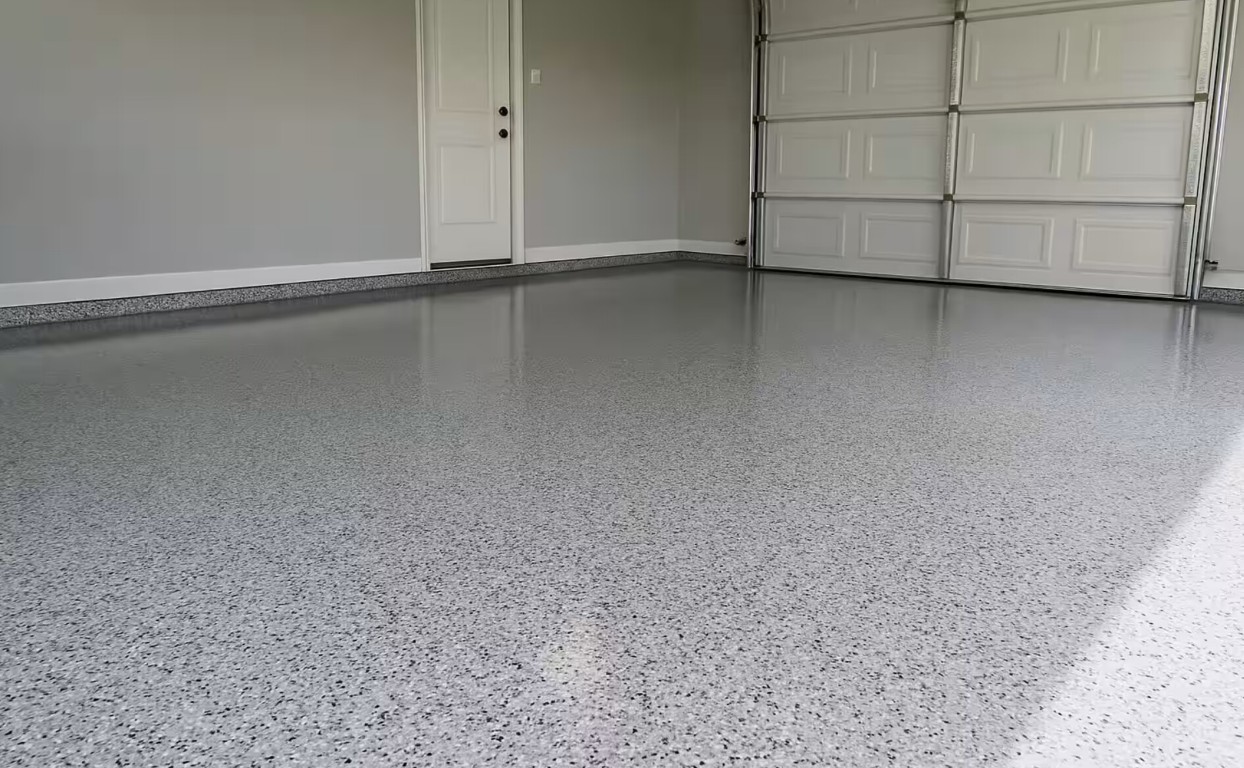
We offer several decorative options to customize your floor's appearance. Color flakes are the most popular. These small chips come in dozens of colors and can be blended to create custom looks. Light coverage shows the base color with accent flakes. Full coverage creates a terrazzo-like appearance.
Metallic epoxy creates a unique, marbled appearance with depth and movement. It's more expensive but creates a stunning, one-of-a-kind floor. Solid colors without flakes create a clean, modern look. We can also add logos or custom designs if you want something truly unique.
Curing and Use
Most coatings can be walked on in 12 to 24 hours. Full cure for vehicle traffic takes 3 to 7 days depending on the coating system and temperature. We'll give you specific timing based on what we install and current weather conditions.
The coating continues to harden over the first 30 days. During this time, avoid dragging heavy items or using harsh chemicals. After full cure, your floor is ready for anything you throw at it.